Australia, Coal and COP31
Adding Local Value to African Countries' Critical Raw Materials Trade
Australia’s coal expansion tests whether climate leadership can survive the pull of national interests.
- Commentary | Resilient Transitions
- August 2026
- Eugene N Nforngwa
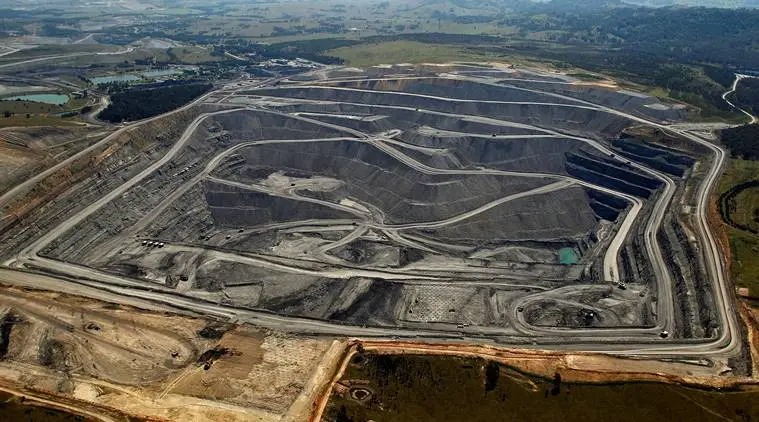
Australia’s decision to continue approving and extending coal production while assuming a central leadership role in COP31 negotiations presents an uncomfortable but important question for global climate governance. What happens when the collective demand for climate action collides with what states perceive to be their national economic interests?
First, some context. Türkiye is formally hosting and presiding over COP31 in Antalya, and Australia is President of Negotiations, with what the two governments describe as “exclusive authority” over leading the negotiations. Australia is also partnering with Pacific states on the pre-COP and agenda.
At almost exactly the same moment, Australia approved an extension of BHP’s Saraji coal mine in Queensland, allowing extraction of another roughly 55 million tonnes of coal and potentially extending operations to 2063. According to the Climate Council’s tally, the Albanese government has approved 37 new, expanded or extended coal, oil and gas developments since taking office.
Many have called this hypocrisy. That may be politically satisfying, but calling it hypocrisy alone misses the more consequential lesson: national interest remains one of the most powerful organising forces in global climate politics.
The United States provides perhaps the clearest example. The Trump administration has explicitly pursued an agenda of American “energy dominance”, accelerating LNG export approvals and framing expanded energy production in terms of employment, economic security, energy affordability and the security of allies. U.S. LNG exports increased by 28.3 per cent between June 2025 and June 2026. The significance for global climate politics is not simply the scale of this expansion, but the logic underpinning it. Decisions over domestic energy resources are explicitly being filtered through a conception of American economic and strategic interest.
Germany offers a different but equally revealing example. The country has adopted ambitious climate targets and legislated the complete phase-out of coal-fired electricity generation by 2038. Yet when Russia’s invasion of Ukraine destabilised European energy supplies, energy security became an immediate national priority. Germany temporarily returned reserve coal plants to the electricity market and rapidly developed LNG import infrastructure to reduce its dependence on Russian pipeline gas. Coal-generated electricity consequently increased by 8.4 per cent in 2022.
Germany did not abandon its long-term climate objectives. Rather, it adjusted the sequencing of its transition when those objectives came into immediate tension with energy security and the reliability of the national energy system. The episode illustrates the broader reality, namely that even states with strong climate commitments mediate the pace and pathway of transition through national circumstances and national interests.
Australia, the United States and Germany present very different political economies, energy systems and climate-policy traditions. Yet their experiences reveal a common underlying dynamic: climate ambition is not pursued independently of national interest but negotiated through it. Domestic priorities continually mediate the pace, sequencing, and boundaries of transition, whether export revenues and resource interests, energy and geopolitical advantage, or energy security and economic stability.
This does not mean that national interest invariably overrides climate ambition. Rather, it means states pursue climate objectives within the political and economic parameters of what they consider nationally viable and strategically important. Across the world, governments remain responsible for employment, public revenue, exports, energy security, industrial competitiveness and electoral constituencies. They must manage the distributional consequences of economic change at home even as they negotiate collective environmental goals abroad.
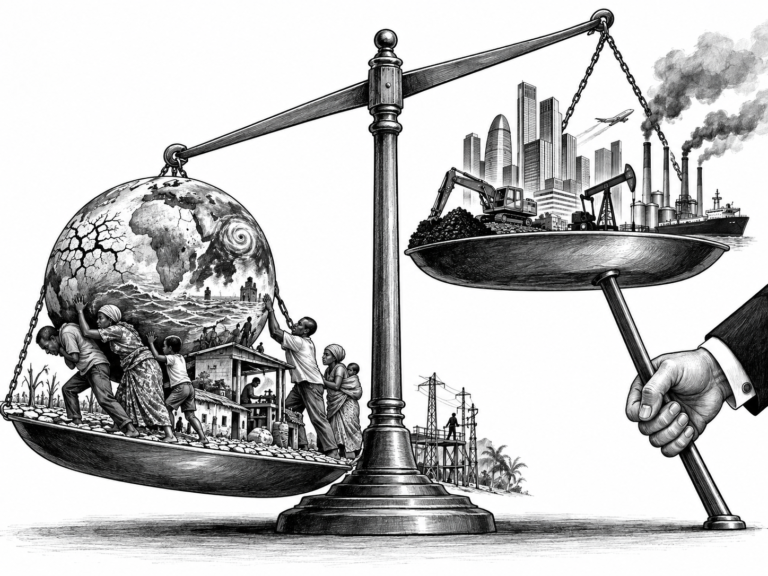
This tension is particularly visible in the politics of fossil fuels. The atmospheric benefits of leaving coal, oil and gas underground are shared globally, while the associated costs in forgone jobs, royalties, export earnings, investment and economic activity are concentrated much more locally.
The Paris Agreement was designed, in part, around this political reality. Rather than imposing a centrally determined allocation of emissions reductions, it relies on nationally determined contributions, allowing states considerable latitude to define their own commitments in light of national circumstances. The international system can set collective temperature goals, establish mechanisms for progressively greater ambition and facilitate finance, technology and cooperation. But while it establishes a common direction of travel and differentiated expectations, it does not centrally allocate the economic burdens of transition, such as which countries should forgo which development or economic opportunities, how rapidly they should adjust, and how the resulting costs should be distributed.
This is where the political economy of the transition becomes unavoidable. Governments may support stronger collective ambition while simultaneously seeking to protect particular domestic and strategic interests. The resulting tension is not simply a failure of political will or climate diplomacy; it is embedded in an international system that depends on sovereign states to deliver a global public good while remaining accountable primarily to national economic and social goals.
Australia’s choice therefore exposes not simply a credibility problem but a deeper burden-allocation problem at the heart of global climate governance.
If a wealthy developed economy with substantial technological capability, mature energy infrastructure and relatively strong institutions concludes that its national economic interests justify continuing coal production during its transition, it becomes increasingly difficult to sustain the proposition that poorer countries should pursue uniformly rapid transition pathways irrespective of their starting conditions, development needs and the capacity to absorb the costs of adjustment.
Recognising different starting points requires greater honesty about how transitions actually unfold. Differentiated transition pathways are sometimes framed as an African claim for exceptional treatment. Yet Australia’s choices point to a much broader reality of the international political economy: states pursue common climate goals from profoundly different starting points and continually reconcile those goals with national development, economic and security priorities. Australia need not consciously assert a principle of differentiated transition for its experience to show that differentiation already occurs in practice.
The international climate regime, of course, formally recognises differentiation. CBDR-RC, the nationally determined character of countries’ commitments, and the recognition of different national circumstances are all embedded within the regime’s architecture. The harder question is whether this formal recognition of differentiation is sufficiently reflected in contemporary expectations about the pace, sequencing, and pathways of transition, particularly for countries that still face substantial energy, infrastructure, and industrialisation deficits.
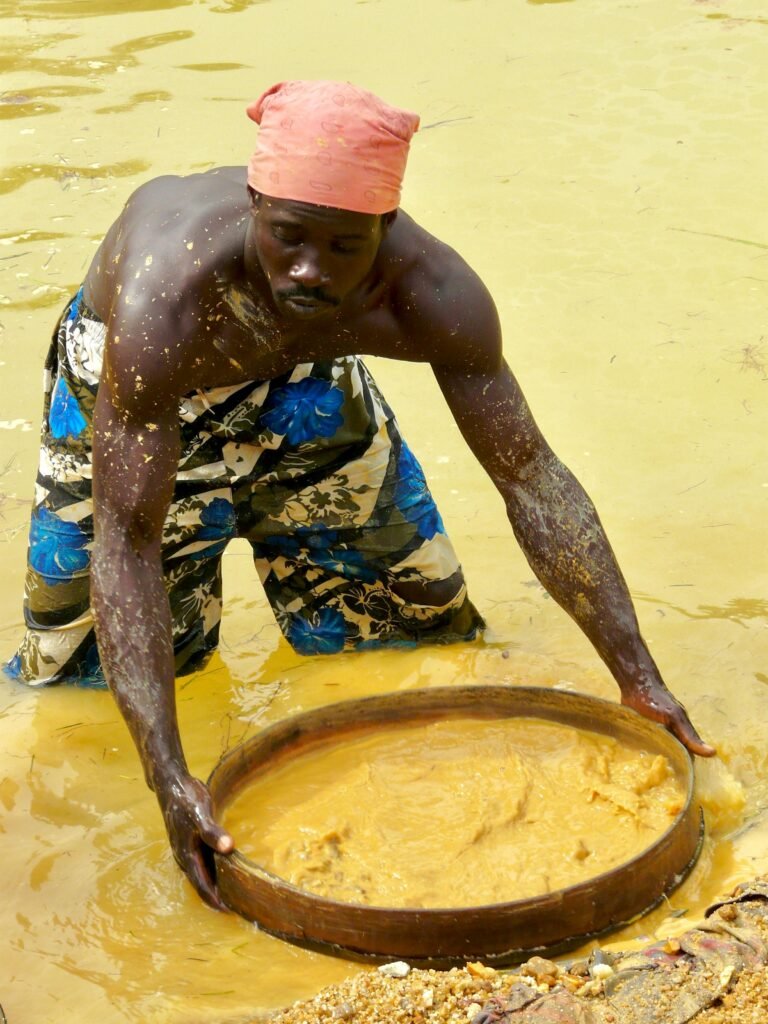
Many African states, for instance, are not primarily confronting the challenge of replacing mature, high-consumption energy systems. Instead, they must expand electricity access, build infrastructure, industrialise, create employment, strengthen fiscal capacity, and increase resilience to climate shocks, even as they are expected to contribute to global decarbonisation. What, then, does fair differentiation look like for countries starting from these conditions?
Australia matters less as a precedent to be followed than as an illustration of the political economy of the transition. If wealthy economies retain considerable room to reconcile their transition pathways with energy security, employment, export revenues and industrial interests, then developing countries have a legitimate basis for insisting that their own transition pathways must also account for development needs, energy adequacy, vulnerability and institutional capacity. The relevant question is not whether they should contribute to the global climate objective, but how they can do so without foreclosing the development transformations they have yet to achieve.
This changes how we understand climate ambition. Ambition cannot be assessed solely by asking how quickly a country eliminates a particular fuel. Particularly for developing countries, a more meaningful assessment would also ask whether a transition pathway delivers durable emission reductions, expands adequate and affordable energy, reduces economic and climate vulnerability, builds productive capabilities, and creates the conditions for progressively deeper climate action. The pace of fuel substitution still matters, but so too does the development pathway through which decarbonisation becomes economically and politically sustainable.
The task of international climate governance, therefore, should not be to erase national interest from transition policy. This is neither realistic nor, given profoundly different national circumstances, necessarily desirable. The task is to build institutions, incentives, finance and technology arrangements that progressively align legitimate national development interests with global climate goals. In other words, global climate governance must make deeper climate action increasingly compatible with, rather than antagonistic to, the development priorities around which governments organise domestic policy.
Seen from this perspective, many apparent disputes over climate ambition are ultimately disputes over development space and the distribution of adjustment burdens. Who gets to industrialise, and through what technologies? Who absorbs the costs of stranded assets? Who finances new infrastructure required for alternative development pathways? Who bears the adjustment costs? And how should historical responsibility and unequal capabilities shape the answers to these questions?
These questions return climate governance to the underlying logic of equity and common but differentiated responsibilities and respective capabilities. But the contemporary challenge of differentiation reaches beyond differentiated emissions targets or financial obligations. It also concerns the pace, sequencing and pathways of structural change in countries with very different energy systems, development needs, fiscal resources, technological capabilities, vulnerabilities and capacities to absorb transition costs.
Fair differentiation, then, should not mean exempting developing countries from the global climate effort. Nor should it provide cover for unlimited fossil-fuel expansion or avoidable delay. It should mean creating sufficient development space for countries to build the energy, infrastructure and productive capabilities they need while progressively reducing carbon and environmental intensity of that development. The destination remains compatible with global climate goals, but the pathways, sequencing, and burden of getting there cannot reasonably be identical.
That may ultimately be the larger lesson from Australia’s coal choices ahead of COP31. They remind us that the transition is not taking place in an abstract global economy governed solely by a carbon budget. It is being negotiated through sovereign states with different starting points, capabilities, vulnerabilities and national priorities. A durable global climate regime will therefore not depend on eliminating national interests from the transition, but on making differentiated national pathways increasingly capable of reconciling development with the collective climate objective.
+++
Eugene N Nforngwa is a Climate, Energy and Development Policy Analyst. He is the Director of Programs and Research at the African Coalition for Sustainable Energy and Access and a board member at ARI. He is on LinkedIn as @eugenenforngwa