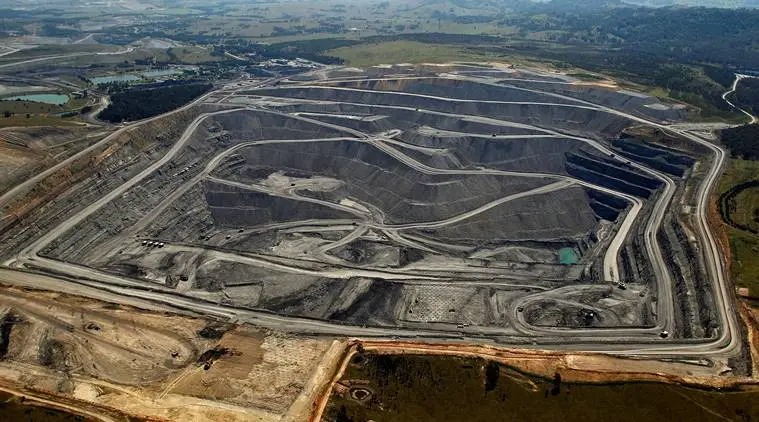
Eleven days after Australia approved the continuation of the Saraji mine’s Grevillea open-cut pit until 2055, permitting the extraction of up to an additional 55 million tonnes of steelmaking coal, the United States repealed key carbon-pollution standards for coal- and gas-fired plants.
Norway, despite its ambitious domestic climate targets, awarded 57 new oil and gas production licences to 19 companies in January 2026. Following Russia’s invasion of Ukraine, Germany temporarily returned reserve lignite plants to the electricity market and prolonged the availability of hard-coal capacity to protect its energy supply.
The circumstances, duration and consequences of these decisions vary. Germany’s response to an acute energy security shock is not equivalent to Australia’s approval of a coal project that could operate for another three decades. Nor does the award of a petroleum licence necessarily result in production.
However, these decisions illustrate what this commentary calls interest-based exceptionalism: the tendency of wealthy countries to prioritise domestic energy security, employment, competitiveness and resource revenue over climate action proportionate to their responsibility and capability.
We need to be concerned because adjusting climate action to national circumstances sits at the heart of global climate governance. But that flexibility was never created to legitimise delay or protect the strategic fossil-fuel interests of wealthy countries.
It emerged from concerns about equity. The UN climate regime recognises that countries have contributed unequally to climate change and possess different capacities to respond. Its foundational convention establishes the principle of common but differentiated responsibilities and respective capabilities (CBDR-RC), requires developed countries to take the lead and gives particular consideration to the needs and circumstances of developing countries.
The Paris Agreement retained this principle “in the light of different national circumstances”. It also requires each successive national contribution to represent progression, reflect a country’s “highest possible ambition” and take account of its responsibilities and capabilities.
Differentiation was therefore intended to reconcile common climate action with profound inequalities in responsibility, capability and development needs. It was meant to ensure that countries which contributed least to climate change and possess the fewest resources to address it were not required to carry an unjust share of the burden.
The danger today is that a principle designed to constrain the powerful and protect the vulnerable is being displaced by much looser practice in which every country determines what climate action its domestic interests will permit.
When national circumstances become exceptions
The problem lies partly in how differentiated responsibility interacts with the nationally determined architecture of the Paris Agreement.
The Paris system combines a common global temperature objective with nationally determined contributions. This flexibility helped secure near-universal participation, but it also leaves governments considerable discretion to define their own ambition, policies and transition timelines.
No binding formula translates historical responsibility, present capability and development need into quantified national obligation. Governments consequently remain the principal judges of what constitutes their own “highest possible ambition”.
The four cases above reflect a broader tendency. When national economic or security interests compete with climate commitments, even wealthy countries often prioritise the former.
These decisions are not necessarily presented formally as applications of differentiated climate actions, nor are their scale, duration and political contexts uniform. But they exploit the same policy space created by a system in which mitigation pathways remain nationally determined.
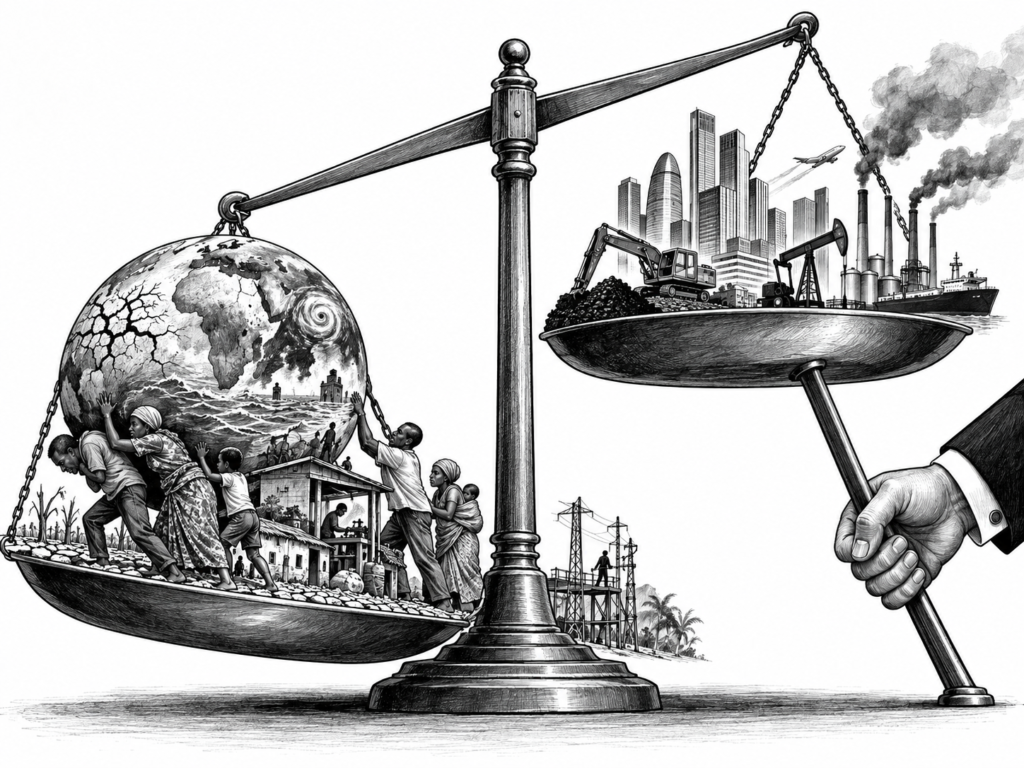
This flexibility creates four related risks: ambition becomes self-assessed; national circumstances operate as an escape clause; individually defensible decisions add up to an inadequate collective response; and the equity principle is inverted when wealthy, historically high-emitting countries preserve carbon-intensive opportunities while poorer countries face tighter development constraints.
The problem extends beyond these individual cases. The 2025 Production Gap Report found that governments collectively plan to produce more than twice the volume of fossil fuels in 2030 that would be consistent with limiting warming to 1.50C. The gap between climate commitments and production plans is therefore becoming a structural feature of the international system.
When climate equity is inverted
This is particularly important for Africa.
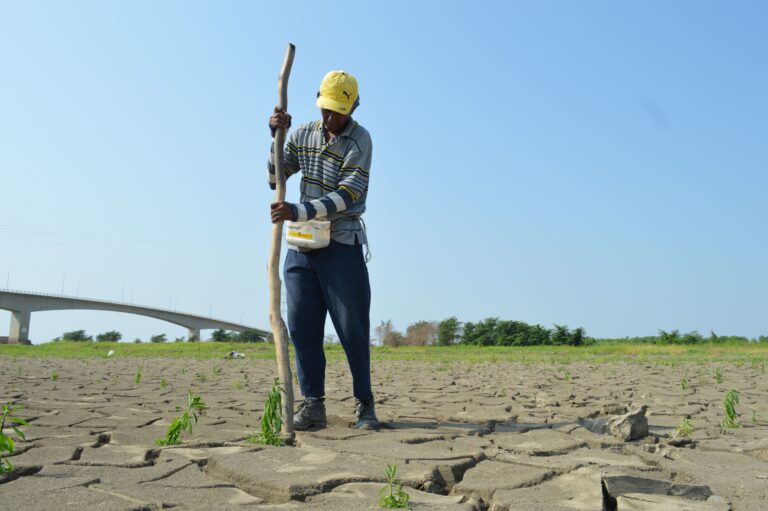
Australia’s coal expansion does not erase the distinction between an advanced economy protecting an established export industry and an African country seeking to provide first-time access to electricity, expand productive capacity or industrialise. Neither does US policy reversal justify treating countries with negligible historical responsibility as if they possessed equivalent responsibility and capability.
The response to Northern backsliding cannot therefore be to abandon differentiation and impose identical obligations on unequal countries. That would make developing countries pay for the failure of developed countries to lead.
The distinction global climate governance must make is between equity-based differentiation, which gives greater policy space and support to countries with low responsibility and limited capability, and interest-based exceptionalism, through which wealthy countries invoke domestic circumstances to avoid action commensurate with their responsibility and capacity.
Rebuilding disciplined differentiation
Differentiation needs stronger boundaries. A workable system should preserve national flexibility while imposing clearer expectations.
Developed countries must continue to face explicit expectations of faster absolute emissions reductions and earlier fossil fuel decline. National circumstances should influence how a country meets its fair contribution, not whether it contributes its fair share.
These boundaries require a transparent fair-share test. Such a test could consider cumulative and per-capita emissions, income and fiscal capacity, unmet energy and development needs, vulnerability and the provision or receipt of international support. It should assess not only territorial emissions targets but also fossil-fuel production plans and the emissions enabled by exports.
The underlying principles are not new. What is missing is an operational framework that translates them into clear expectations and measurable accountability.
Such a framework would help differentiation retain its original function of protecting countries with the least responsibility and capability from unjust burdens while demanding greater leadership from those most responsible and best equipped to act. Equity would then become a source of ambition rather than an alibi for delay.