In the aftermath of COP31’s collapse in Antalya, a convenient narrative is taking hold in Western capitals: that the European Union and the United Kingdom stood as the world’s climate conscience, bravely killing a flawed text because it erased fossil fuel phase-out language. The narrative is false. In Antalya, Europe displayed hypocrisy, not leadership.
Europe has spent five years locking in new fossil fuel infrastructure. In Antalya, it then sabotaged the financial foundations of the summit for two weeks and posed as the hero when the roof caved in.
Yes, the rejected Antalya Pact was deeply retrogressive on fossil fuels. But Europe’s demand for ambitious fossil fuel exit roadmaps from developing countries does not hold up when it blocks the money those countries need to survive and transition, while expanding fossil fuel capacity at home. It is a double standard, and developing countries are the ones paying for it.
The evidence from the last five years, and from projects still in the pipeline, exposes the gap between Europe’s rhetoric in Antalya and its reality at home.
Start with gas. Between 2021 and 2025, the EU expanded its liquefied natural gas (LNG) import capacity by 76 billion cubic metres (bcm), reaching 242 bcm per year, according to the Council of the EU. It spent roughly €281 billion on LNG imports between 2022 and 2025 alone, by the estimate of the Institute for Energy Economics and Financial Analysis (IEEFA). Far from winding down, the bloc plans to add another 100 bcm of import capacity between 2025 and 2030, with Germany alone projected, per IEEFA, to nearly triple its regasification capacity to 56.1 bcm by 2028. Europe is also drilling at home. In the Black Sea, Romania’s €4 billion Neptun Deep project, approved in 2023, holds an estimated 100 bcm of recoverable gas, according to its operator, OMV Petrom. Production drilling began in 2025, and the field is slated to come online in 2027, positioning Romania as the EU’s largest natural gas producer.
Subsidies tell the same story. Despite repeated pledges to phase out fossil fuel subsidies, EU member states’ subsidies remain well above 2021 levels, and 52% of them (roughly €50 billion) still carry no planned end date before 2030, according to the European Environment Agency and the European Commission.
The United Kingdom follows the same script. Just one month before the UK formally objected in Antalya to a COP31 text that ignored fossil fuels, Energy Secretary Miatta Fahnbulleh approved the Shell- and Equinor-backed Jackdaw gas field in the North Sea on 21 October 2026, the UK government confirmed. A decision is still pending on Rosebank, the UK’s largest undeveloped oil field, which holds up to 500 million barrels, press estimates suggest. London is rolling out “Transitional Energy Certificates” to allow new production near existing fields, Credence Research reports, and it is expanding Grain, Europe’s largest LNG terminal, from 21.7 bcm to 27 bcm, its owner, Energy Capital Partners, says.
Defenders of these projects point to energy security after the loss of Russian pipeline gas. The concern is legitimate, but it is not unique to Europe, and it does not entitle Europe to demand phase-out roadmaps from others while denying them the means to transition.
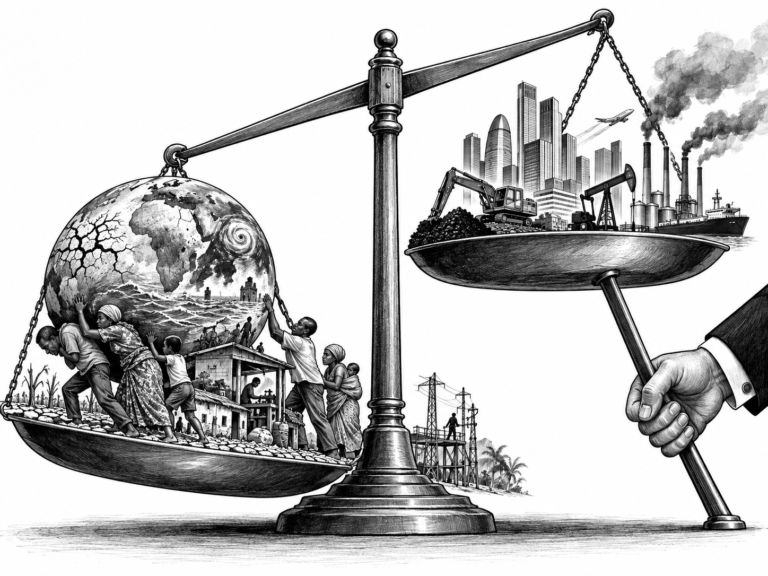
The negotiating record is no more flattering, and the EU and UK’s moral grandstanding in Antalya rings hollow. The goal of tripling adaptation finance to $120 billion a year was dropped, as wealthy nations, a group that includes the EU and UK, backslid on their climate finance obligations. They fought to keep the Just Transition Mechanism an unfunded talking shop, left the Loss and Damage Fund starved of capital, and defended unilateral green trade barriers that penalise African exports. For Africa, the stakes are concrete. The continent’s assessed adaptation needs are at least $70 billion a year, yet tracked adaptation finance reached just $14.8 billion in 2023, and more than half of it arrived as loans, according to the Global Center on Adaptation and Climate Policy Initiative.
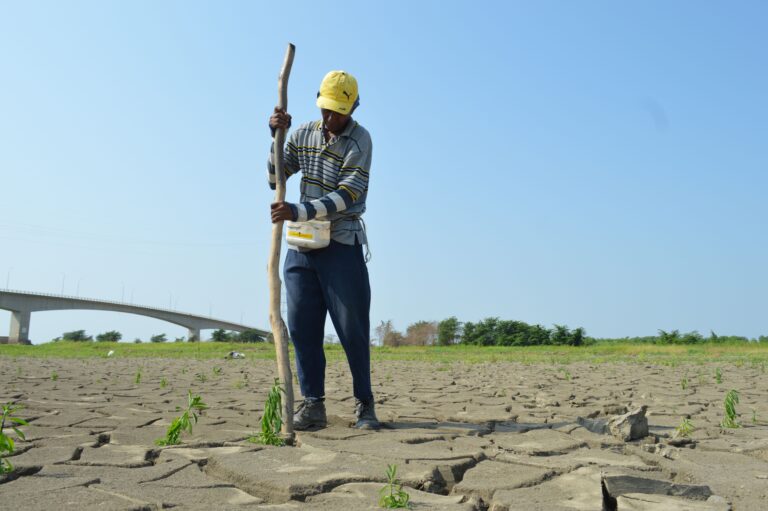
To be clear, this critique is not a defence of fossil fuels. The science is unambiguous, and Africa, which has contributed least to the crisis, is already paying some of the highest costs in droughts, floods, and failing harvests. Climate extremes cost African countries 2% to 5% of GDP a year on average, and many divert up to 9% of their budgets to respond, according to the World Meteorological Organisation. The objection is not to a fossil fuel phase-out but to the way it is demanded of others and dodged by Europe itself: the EU and UK expect African countries to forgo their own resources and accept the risks of the transition while locking in new gas and oil capacity at home. Calling out that inconsistency is not an argument for burning more fossil fuels. It is a demand that those who built their wealth on fossil fuels, and now preach restraint, lead by example and pay their fair share.
Rejecting a bad text over fossil fuel wording does not wash Europe’s hands of the wreckage it helped create in Antalya. Africa and the Global South cannot be asked to leapfrog fossil fuels while the public finance, technology transfer, and policy space needed to build clean energy systems are withheld and billions flow into Europe’s own gas terminals and offshore wells. Climate ambition is not measured by how loudly a country protests in a closing plenary. It is measured by whether it honours its historical obligations and stops expanding fossil fuels at home.